The traps go in before anyone announces the season is open. Sometime in the first week of October, a few homeowners along Gordon Drive and the canals off Naples Bay will quietly lower a wire trap or two off their own seawall, baited with a grouper head, and leave it to soak overnight. That is how stone crab season actually starts in Port Royal. Not with a calendar date. With a trap appearing where there wasn't one the week before.
This year, that trap needs something it didn't need a few seasons ago: a registration number printed on it, along with the owner's name and address, filed for free with the state before it ever touches the water.
The Rule That Changed Quietly
Florida's stone crab season runs October 15, 2026 through May 1, 2027, the same window it has held for years. What's different is a recreational trap registration requirement the Florida Fish and Wildlife Conservation Commission rolled out starting with last season, and this is only its second year in effect. Anyone 16 or older who sets a trap for stone crab now has to complete a no-cost registration through GoOutdoorsFlorida.com, even people who are normally exempt from needing a fishing license at all. The requirement applies whether the trap goes off a commercial boat or off a private dock behind a Port Royal estate.
Once registered, the state issues a unique number that starts with the letter "S." That number, along with the owner's full name and address, has to be legibly and permanently attached to the trap itself, not just written on a tag that can wash off. It's a small piece of paperwork, and it's easy to miss if you haven't set a trap in a couple of years, which describes a fair number of Port Royal households who crab casually, a trap or two a season, more out of habit than serious harvest.
The rest of the rules haven't moved much:
- Minimum claw size is 2 7/8 inches, measured from elbow to tip
- Only the claw comes off. The crab goes back in the water to regrow it
- A single person can run up to five traps at a time
- Each trap needs an unobstructed escape ring, about 2 3/16 inches across, built into a vertical wall of the trap
- Daily limit is one gallon of claws per person, or two gallons per vessel, whichever is smaller
- Traps can only be pulled during daylight hours
None of that is new. The registration number is the one thing that changes the ritual this year, and it's the sort of detail that spreads through a neighborhood by word of mouth rather than official notice.
Naples Water, Not Just Naples Menus
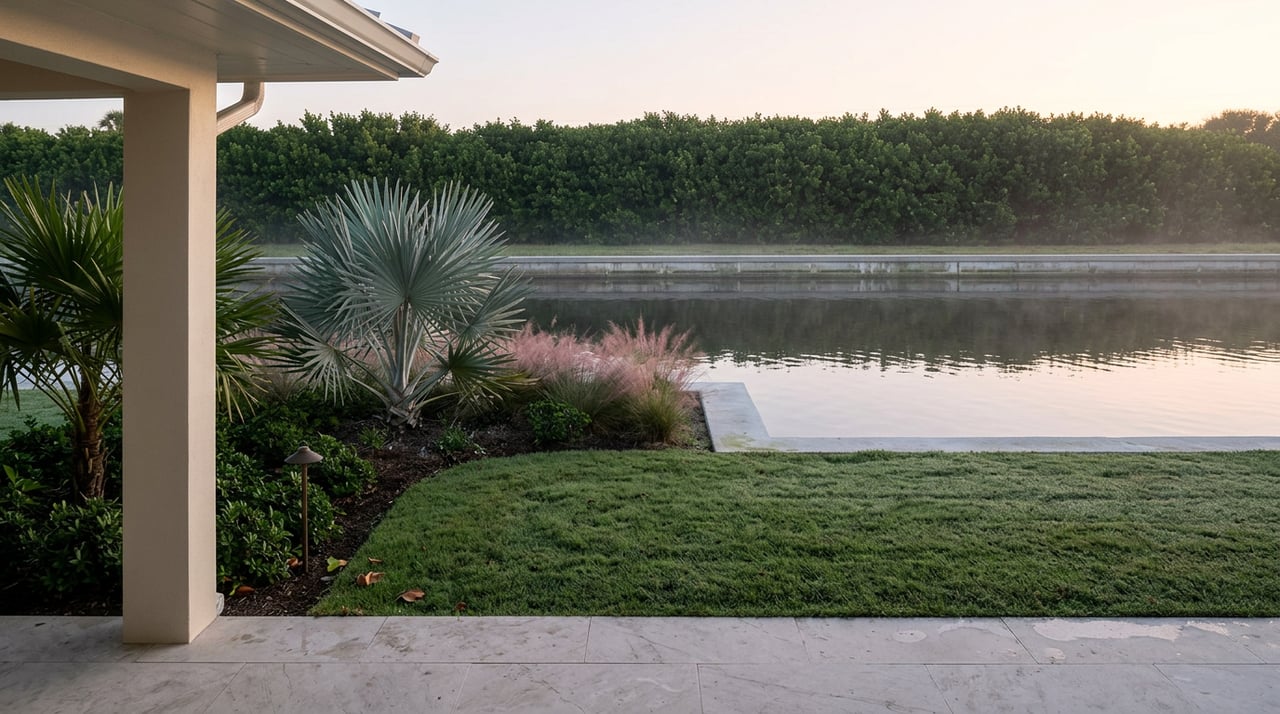
Naples, Marco Island, and the Ten Thousand Islands make up one of the largest stone crab harvesting regions in the country, which is part of why the claw shows up on so many menus along this stretch of coast every winter. But Port Royal's relationship to the season is a little more direct than most neighborhoods get to claim. The estates here back onto canals that feed into Naples Bay and out through Gordon Pass, and those same residential canal walls are exactly the kind of structure stone crabs favor. A trap doesn't need a boat trip to the Gulf. It just needs a dock.
That's a different kind of proximity than most people associate with a Port Royal address. The neighborhood's water access usually gets talked about in terms of yacht drafts and dock permitting. Stone crab season is the one week of the year when the same private seawall becomes something closer to a kitchen garden than a marina slip.
The Festival Makes It Official Downtown
If the traps mark the season's quiet start, the Naples Stone Crab Festival marks its public one. The Old Naples Waterfront Association hosts the festival at Tin City October 23 through 25, 2026, timed to the season's opening. The event spreads across Tin City, Bayfront, and the Port of Naples, with free water taxis running between the waterfront locations so nobody has to fight for parking at every stop. Friday night opens with the "cracking of the crab" at 5:30 p.m., followed by live music from the Soapy Tuna Band from six to nine.
For Port Royal, the festival is close enough to feel like a neighborhood event rather than a downtown outing. Tin City sits a short water taxi ride from the same canals where the season already started a week earlier, on the other side of Gordon Pass. Residents who've watched their neighbor's trap come up light for a few days in early October tend to know the festival weekend is really just the season catching up to what the docks already told them.
What This Actually Means If You're Watching From the Water
None of this changes anything about home values or club dues, which is refreshing, honestly, in a neighborhood where most of the news that reaches this blog involves one or the other. It's a reminder that Port Royal's calendar runs on a few tracks that have nothing to do with real estate at all. The dock behind a house here is a working piece of waterfront before it's ever a selling point, and stone crab season is the clearest example of that every fall.
If you're new to the neighborhood and thinking about setting a trap of your own this year, the registration takes a few minutes online and costs nothing. If you're a longtime resident who hasn't crabbed since before the rule existed, this is the season to check before you bait a trap, not after a warden asks to see the number on it.
Either way, the traps are already going in. The festival just gives everyone else something to show up for.
If you ever want to talk about what else changes with the seasons here, from the water to the club calendar to the dining scene along the bay, Bryan Tipple is always glad to talk Port Royal. Let's Connect.